

How to Get Oil Stains Out of a Concrete Driveway
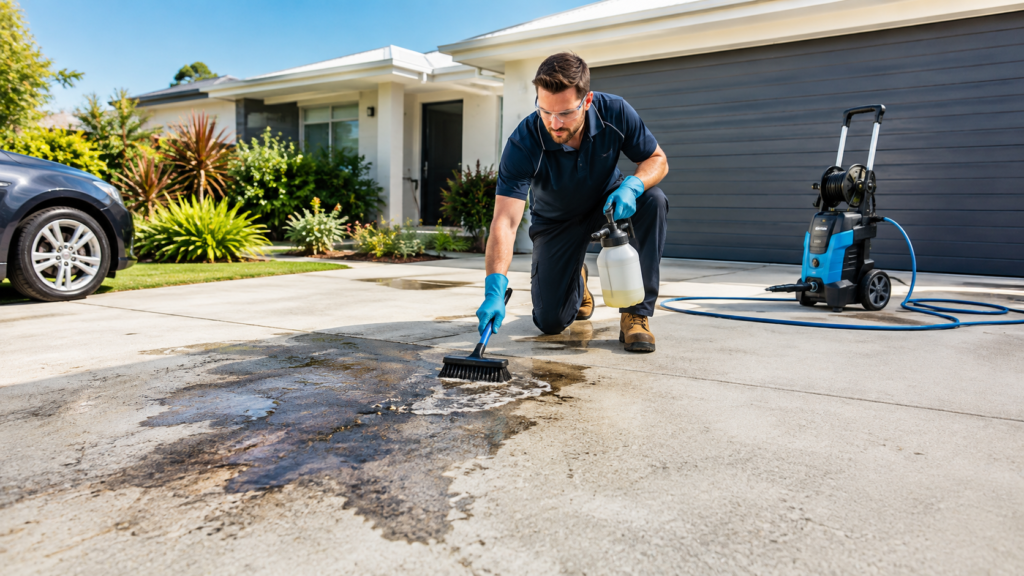
Oil stains on concrete driveway may take away from an otherwise clean and attractive property. Oil can soak quickly into the porous surface of concrete, whether from a leaking car, motorcycle, lawn equipment or an accidental spill. The longer it goes untreated, the harder it may be to get rid of.
The good news is that there are plenty of ways to take care of oil spots, from DIY home cleaning tips to professional driveway concrete cleaning services. The best way will depend on how old the stain is, how deep the oil has gone and the overall condition of the driveway.
In this guide, we will show you practical ways to remove oil stains and why professional concrete cleaning may be a worthy consideration for tough stains.
Why is it so hard to get oil stains out of concrete?
Concrete looks solid, but it has tiny pores where liquids can be absorbed. Oil from spills on concrete driveways can seep into the concrete instead of just sitting on the surface.
Fresh oil is generally easier to remove since it has had less time to penetrate the concrete. Older stains can darken and become more deeply embedded, requiring repeated cleaning, or specialist treatment.
That’s why addressing an oil spill as soon as possible can make a big difference
1. Drink Fresh Oil ASAP
If you see an oil spill, the first thing you should do is try to soak up as much of the oil as you can.
You can use an absorbent material such as
• Litter for cats
• Baking powder
• wood chips • sawdust
• Corn starch
• Commercial oil-absorbent material
Generously apply the material on the affected part and let it absorb the oil. Give it time to work and then sweep it up and dispose of it properly.”
Do not immediately scrub a fresh oil spill with water because you might spread the oil across the surrounding concrete and make the area you have to clean bigger.
Step 2: Use Dishwashing Liquid
For relatively fresh or light stains, plain liquid dish detergent might help break down the oily residue.
Apply a little of the detergent directly to the stain and add a little warm water. Using a stiff-bristled brush, scrub the area from the outside of the stain toward the center.
Allow the detergent to sit for a few minutes, then rinse.
If necessary, repeat the process. Some stains may require more than one application to see improvement.
Step 3: Try a Baking Soda Solution
Baking soda is also good for smaller oil stains.
Sprinkle over the affected area, using a generous hand, and add enough water to make a paste. Work the paste into the concrete with a stiff brush.
Leave it on for a few minutes and then scrub and rinse the area well.
This technique may be more suitable for small or more recent stains than for deeply embedded oil.
Step 4: Apply a Commercial Concrete Degreaser
For tougher stains, a degreaser safe for concrete might be more effective.
Always read and follow the manufacturer’s instructions before applying any cleaning product. Some products may require dilution, require protective equipment when applying, or require a specified amount of time to remain on a surface.
Test the product on a small inconspicuous area of the driveway first to make sure that it is not going to cause any unwanted discolouration or surface damage.
Apply the degreaser to the stained area and let it work as per the instructions, scrub with a suitable brush and rinse thoroughly.
Step 5: Think About Pressure Washing
Pressure washing removes loose oil, dirt, grease, and cleaning residue from concrete surfaces.
But pressure washing must be done carefully. Excessive pressure or holding the spray nozzle too close to the concrete surface can cause damage and/or uneven cleaning patterns.
If you have a large driveway or a lot of oil contamination, you may be better off hiring a professional driveway concrete cleaning company. They have experience and know how to choose the right pressure level, cleaning solution and techniques for your surface.
How can Professional Driveway Concrete Cleaning Services Help
DIY cleaning can be effective for small, fresh stains, but older or more extensive oil marks may require more specialised treatment.
Professional cleaners generally assess the concrete’s condition to decide on the cleaning approach. Depending on the circumstances, they may use commercial-grade degreasers, pressure cleaning equipment, surface cleaning tools and other appropriate techniques.
Professional cleaning offers a variety of advantages:
Better gear
Professionals have access to equipment made for exterior concrete cleaning. This can remove embedded dirt and grime more effectively than regular household equipment.
Appropriate Cleaning Procedures
Different concrete surfaces require different treatment. A professional can tell you whether your driveway needs pressure cleaning, degreasing, spot treatment, or a combination of techniques.
More Uniform Results
DIY pressure washing can result in streaks or uneven patches. A seasoned cleaner knows how to consistently clean larger surfaces.
Time Saved
Cleaning a large driveway can be a time-consuming process, particularly when stains need several treatments. By hiring professionals, you can focus on other household tasks.
Don’t Make These Common Oil Stain Errors
When trying to remove an oil stain do not use anything that will damage the drive way or cause other problems.
Don’t Put Too Much Pressure
Some concrete surfaces can be damaged by very high pressure. Always use a suitable pressure level.
Don’t Scrub Hard Without Testing
Some cleaning chemicals and abrasive techniques can affect decorative, sealed, painted or coated concrete.
Never Mix Cleaning Chemicals
Never mix different cleaning products as dangerous chemical reactions can occur. “Use products only as directed.
Don’t Overlook Old Stains
The longer oil sits on concrete the more difficult it can be to clean up. Remove stains as soon as they appear.
How to Avoid Future Oil Stains
In most cases, it’s easier to prevent than to remove a set-in stain.
If your vehicle has a small leak, have it fixed immediately. Another choice is to place an oil-absorbent mat or drip tray under a temporarily leaking vehicle.
Regular driveway cleaning can also help prevent dirt, grease and other contaminants from building up over time.
If the concrete is right for sealing, you may also want to speak with a qualified professional about sealing concrete. A good sealer will help prevent some substances from penetrating, but it doesn’t make concrete stain-proof.
When to Call a Pro?
You should consider professional driveway concrete cleaning services if:
• The oil stain is old or widespread
• DIY cleaning has not delivered satisfactory results.
• Large driveway.
• There are stains of different kinds.
• You are worried about harming the concrete.
• You want a more consistent overall cleaning.
• The driveway requires specialist pressure cleaning equipment.
Professional cleaning can be especially helpful when you want to improve the general appearance of a driveway, rather than just addressing one small oil spot.
How to Keep Your Concrete Driveway Looking Great
Oil stains are common but they don’t have to be a permanent blemish on the look of your driveway. If the stain is small, act quickly, blot up the fresh oil, choose the right cleaning product and scrub gently.
For older, stubborn or widespread contamination, professional driveway concrete cleaning services can offer a more thorough approach. A professional cleaning service can look at the surface and choose the right cleaning methods, and help restore a cleaner look without the use of potentially damaging DIY methods.
For dependable exterior cleaning services, take a look at the options offered by Eco Quick Clean.
FAQs About Driveway Concrete Cleaning
How to Remove Oil Stains from Concrete Driveway?
Fresh oil stains are easier to get out than old stains. Deeply soaked oil may require repeated treatment or professional cleaning and removal cannot be guarantyd at all.
How to remove fresh oil from concrete?
First, absorb the oil with an appropriate absorbent material. Once you’ve wiped up the excess oil, apply a concrete-safe detergent or degreaser and scrub the stained area before rinsing well.
Will pressure washing remove oil stains on concrete?
Pressure washing can help remove loosened oil, grease, dirt and cleaning residue. But, if you have stubborn oil stains, you may need to use a degreaser or some special treatment before pressure washing.
How often should my concrete driveway be professionally cleaned?
There isn’t a universally applicable schedule because cleaning requirements are based on vehicle traffic, weather, dirt buildup and condition of the driveway. Regular cleaning (as visible staining and heavy dirt start to build up) will help keep it looking good.
Can I use household cleaners on my concrete driveway?
Some household cleaners are effective on minor stains, but not all products are designed for concrete. Always read the instructions on the product and test on a small area before treating a larger area.
Why hire professional concrete driveway cleaning services?
Professional cleaners have the experience and the right equipment to treat outdoor concrete. They will be able to decide on the surface and choose the most appropriate cleaning methods, saving time and decreasing the likelihood of uneven cleaning or unintentional damage to the surface.